A vehicle wrap changes the exterior appearance by applying a flexible vinyl film over the existing paint. A repaint removes or prepares the existing finish and applies new automotive paint.
The biggest distinction is reversibility. A professionally installed vinyl wrap can generally be removed later, revealing the original finish. A repaint permanently changes the vehicle’s painted surface.
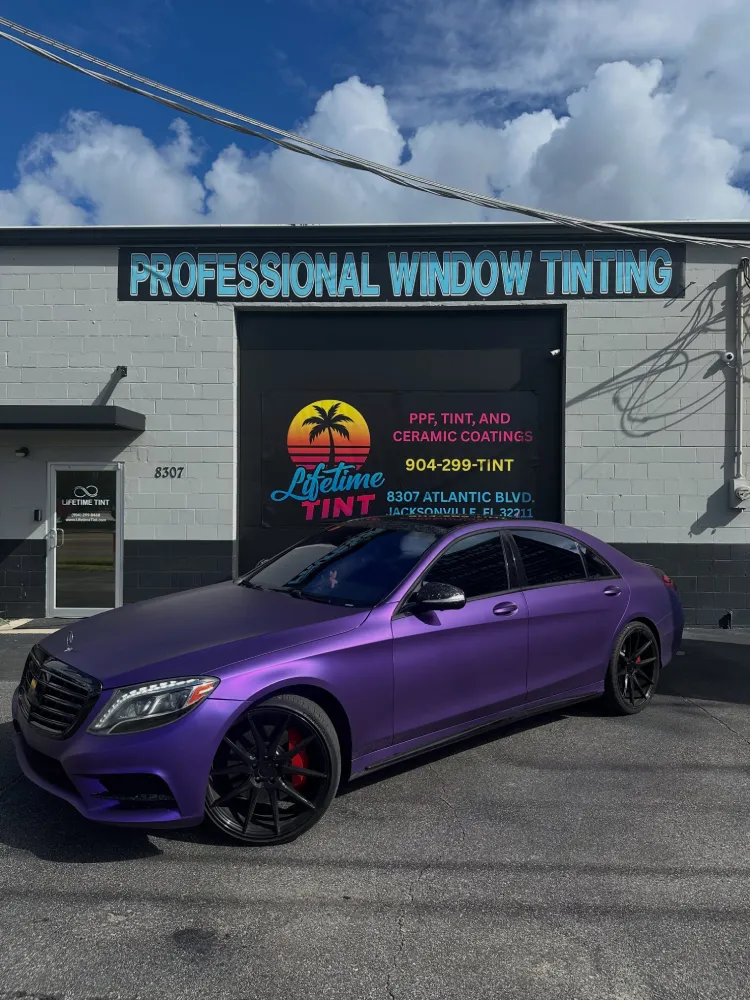
Vinyl wrap offers a wide range of styling options, including gloss, matte, satin, metallic, color-shifting, carbon fiber, and textured finishes. Lifetime Tint provides these customization options to help vehicle owners achieve their preferred look.
Is Vinyl Wrap Usually Less Expensive Than Repainting
Vinyl wrap can be less expensive than a high-quality professional repaint, but there is no universal price difference that applies to every vehicle. The cost of either option depends on the amount of labor, preparation, materials, and customization involved.
A full repaint may require extensive preparation, including sanding, priming, painting, and clear coating. A professional wrap also requires careful preparation, but it doesn’t involve completely repainting the vehicle.
Factors affecting wrap cost include:
- Vehicle size
- Number of panels
- Vinyl material
- Finish selected
- Design complexity
- Paint preparation
- Trim and panel disassembly
- Installation time
Lifetime Tint states that wrap pricing depends on vehicle size, film choice, finish, design complexity, coverage area, and preparation requirements.
Vinyl Wrap Vs Repainting Comparison
| Factor | Vinyl Wrap | Vehicle Repaint |
| Appearance | Wide range of colors and finishes | Wide range of paint colors and finishes |
| Reversibility | Can generally be removed | Permanent color change |
| Customization | Strong options for color and finish changes | Extensive custom paint options |
| Factory Paint | Covers the existing finish | Replaces or alters the existing finish |
| Installation | Film is applied over prepared surfaces | Paint is applied through a multi-stage process |
| Future Changes | Can be changed by removing or replacing film | Requires another paint process |
| Best For | Temporary or reversible customization | Permanent appearance changes |
The right option depends on whether the owner values reversibility, customization, permanence, or a specific restoration objective.
What Makes Vinyl Wrap More Affordable In Some Cases
One reason wrapping can be more economical is that it changes the vehicle’s appearance without requiring a complete paint job. The existing paint remains underneath the vinyl, provided it is suitable for installation.
A wrap can be especially appealing for owners who want a significant visual change without permanently committing to a new color.
It can also be useful for:
- Personal vehicles
- Luxury vehicles
- Specialty builds
- Commercial vehicles
- Leased vehicles where appropriate
- Owners who want to change styles periodically
Lifetime Tint specifically promotes vinyl wrap as a reversible alternative to permanent paint changes and offers both personal and commercial wrap applications.
Does Vinyl Wrap Protect The Original Paint
Vinyl wrap can help protect covered factory paint from certain everyday exposure, including light wear, sunlight, road grime, and minor surface contact. However, it should not be confused with paint protection film.
PPF is specifically designed for stronger protection against road debris and impact damage, while vinyl wrap primarily changes the vehicle’s appearance.
When professionally installed and properly removed, vinyl can help preserve the condition of the factory paint underneath. This can matter for owners who want the option to return the vehicle to its original appearance later.
What Conditions Should Be Addressed Before Wrapping
Vinyl wrap performs best on a properly prepared surface. Existing paint problems can affect the film’s appearance and adhesion.
Before installation, the vehicle should be inspected for:
Peeling Paint
Definition: Paint that has begun separating from the underlying surface.
Consideration: Loose or failing paint may prevent proper wrap adhesion and may need to be addressed first.
Severe Scratches
Definition: Scratches that extend deeply into the paint system.
Consideration: A wrap does not repair deep paint damage. Existing defects can remain visible beneath the film.
Contamination
Definition: Dirt, wax, road film, adhesive residue, or other substances on the paint.
Consideration: Contaminants can interfere with the film’s ability to bond and affect the final finish.
Lifetime Tint’s installation process includes washing, inspection, surface preparation, and, when necessary, careful removal of trim pieces or panels to improve fitment and edge quality.

Common Myth: A Vinyl Wrap Is Just A Cheaper Paint Job
A common misconception is that vinyl wrap is simply a less expensive version of repainting. The two processes serve different purposes.
A repaint permanently changes the painted surface, while a vinyl wrap provides a removable exterior film. Vinyl also lets owners choose finishes that may be difficult or impractical to reproduce with traditional automotive paint.
For example, an owner can select a matte, satin, metallic, color-shifting, carbon fiber, or textured appearance depending on available materials.
The best option depends on the vehicle and the owner’s goals, not price alone.
How Does Installation Quality Affect The Cost
Professional installation requires more than simply sticking vinyl onto a vehicle. Accurate application around curves, edges, handles, badges, body lines, and other details requires experience and precision.
A professional installation generally includes:
- Design consultation and material selection
- Vehicle washing and inspection
- Surface preparation
- Selective panel or trim disassembly when appropriate
- Panel-by-panel film application
- Edge and seam finishing
- Final quality inspection
- Care and maintenance instructions
Lifetime Tint describes its wrap process as starting with a consultation, followed by preparation and panel disassembly when needed, then careful film application and a final inspection.
How Long Can A Vehicle Wrap Last
A professionally installed vinyl wrap in Jacksonville, FL, can last several years, but its lifespan depends on the material, sunlight exposure, vehicle use, washing practices, storage conditions, and maintenance.
The environment matters because prolonged exposure to intense sunlight can affect exterior films over time. Proper maintenance can help preserve the wrap’s appearance.
Vehicle owners should follow recommended washing procedures and avoid products or techniques that can unnecessarily damage the film.
Is Vinyl Wrap A Good Choice For A New Vehicle
Vinyl wrap can be a practical option for a new vehicle when the owner wants to customize its appearance while retaining the option to return to the original color later.
New vehicles can also benefit from a removable film over the factory paint, provided the paint is in suitable condition.
Owners should understand, however, that vinyl wrap is not a substitute for PPF when impact protection against rock chips is the primary objective.
Can A Wrap Increase The Value Of A Vehicle
A vinyl wrap does not automatically increase a vehicle’s resale value. Its impact depends on installation quality, the condition of the underlying paint, the buyer’s preferences, and whether the wrap is removed properly.
One potential advantage is that a removable wrap lets an owner return to the original color before selling the vehicle. Preserving the factory paint underneath may also be desirable if it remains in good condition.
This makes reversibility an important advantage to consider when comparing Vinyl Wraps in Jacksonville with permanent repainting.
How Should A Wrapped Vehicle Be Maintained
Proper care helps maintain the appearance and lifespan of vinyl film.
Vehicle owners should:
- Wash the vehicle regularly
- Use recommended cleaning products
- Avoid abrasive tools
- Remove contaminants promptly
- Follow the installer’s care instructions
- Minimize unnecessary prolonged exposure to harsh conditions
Lifetime Tint provides customers with care instructions, including washing recommendations and guidance about what to avoid after installation.
Why Choose Professional Vinyl Wrap Installation
A wrap’s quality depends heavily on both the material and the installation. Poor preparation or improper application can result in bubbles, visible seams, lifting edges, wrinkles, or inconsistent coverage.
Lifetime Tint is a family-owned and female-owned automotive protection business with more than 20 years of installer experience. The company offers vinyl wraps alongside window tint, paint protection film, ceramic coating, paint correction, and flat glass window film.
For vehicle owners considering Jacksonville, FL Vinyl Wraps, professional consultation can help determine the appropriate material, finish, coverage, and preparation requirements.
In Summary
Vinyl wrap can be a more affordable alternative to repainting when the goal is to change a vehicle’s appearance without permanently altering its factory paint. It also provides greater reversibility and extensive finish options, making it useful for owners who want flexibility.
Lifetime Tint provides professional vinyl wrap installation with consultation, surface preparation, precise application, and post-installation care guidance.
Contact us today to discuss your vehicle, explore available finishes, and determine whether a professional vinyl wrap is the right alternative to repainting.
People Also Ask
Is wrapping a car cheaper than repainting it?
A vinyl wrap can be more affordable than a high-quality full repaint, but pricing varies according to vehicle size, material, coverage, preparation, and design complexity.
Does a vinyl wrap damage factory paint?
When professionally installed and properly removed, vinyl wrap is designed to cover the existing paint rather than replace it. The condition and quality of the underlying paint can affect the result.
How long does a vinyl car wrap last?
A professionally installed wrap can last several years, depending on material quality, sunlight exposure, maintenance, storage, and driving conditions.
Can I remove a vinyl wrap later?
Yes. One of the primary advantages of vinyl wrap is that it can generally be removed, allowing the vehicle to return to its previous appearance when the underlying paint is suitable.