
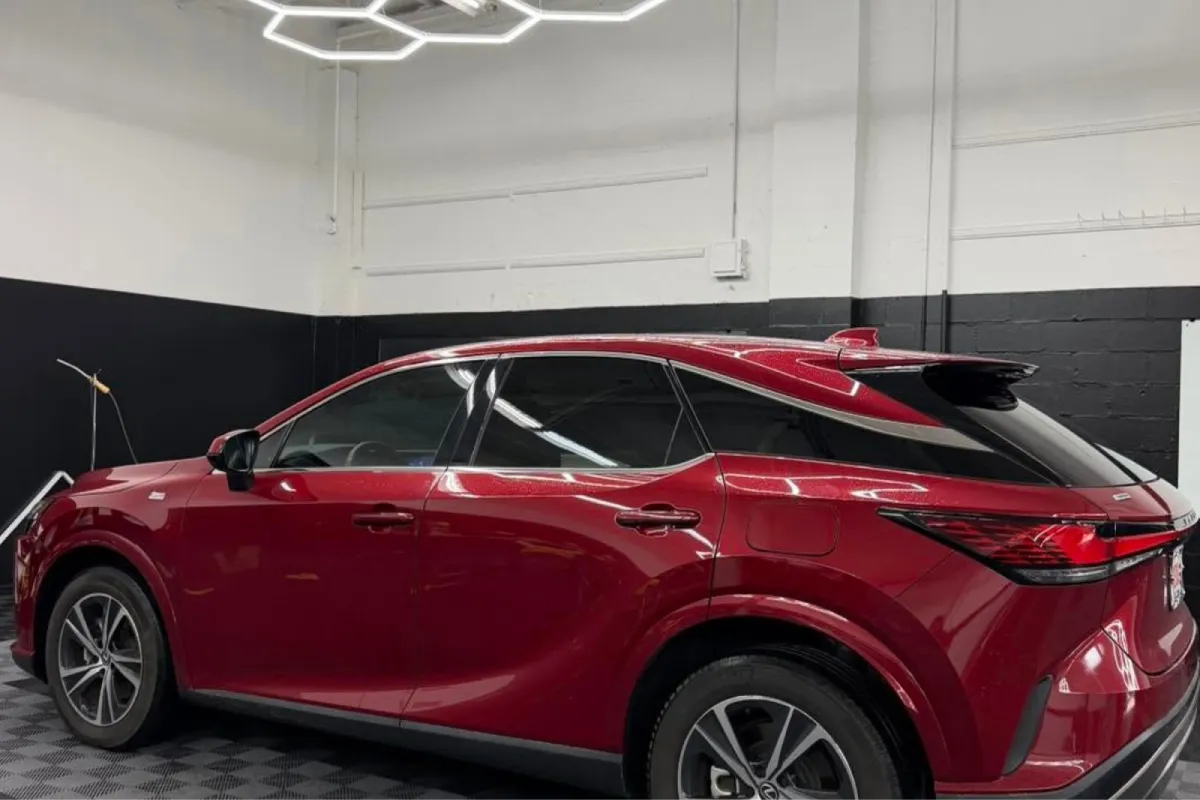
Paint correction uses machine polishing to remove or reduce visible paint defects, while standard polishing mainly enhances gloss and addresses minor imperfections. Correction requires a more detailed inspection and may involve multiple polishing stages, whereas standard polishing is less intensive and best suited to paint that is already in good condition.
What Is Paint Correction And How Does It Work
Paint correction is a professional refinishing process that improves the appearance of automotive paint by reducing clear-coat defects.
Over time, painted surfaces develop imperfections from improper washing, environmental exposure, road contamination, and repeated contact with abrasive materials.
These defects scatter reflected light, making the finish appear dull, hazy, or scratched.
Professional paint correction in Jacksonville, FL addresses eligible imperfections using specialized polishing machines, abrasive compounds, and carefully selected pads.
The technician removes a controlled amount of clear coat to level certain surface irregularities and restore a more consistent reflection.
Common defects addressed through paint correction include:
- Swirl marks caused by improper washing and drying.
- Light scratches confined to the clear coat.
- Holograms from previous machine polishing.
- Certain water spot etching.
- Light oxidation and surface haze.
- Dull or inconsistent paint reflections.
Not every defect can be safely eliminated. Deep scratches that penetrate beyond the clear coat may require touch-up work or professional refinishing.
The objective is not simply to create shine but to improve the underlying painted surface.
What Is A Standard Car Polish
A standard car polish is generally a light polishing treatment intended to enhance gloss, improve reflections, and reduce minor surface imperfections.
Unlike a comprehensive paint correction service, standard polishing usually involves less aggressive abrasives and fewer working stages.
The exact definition varies between detailing businesses because the industry has no universal standard for polishing packages.
Some detailers use the term to describe a single-stage machine polish, while others use it to refer to a quick gloss-enhancement treatment.
For vehicle owners researching paint correction in Jacksonville, understanding this distinction helps prevent confusion when comparing service descriptions.
Standard polishing works best on vehicles with relatively healthy paint and only minor visual imperfections.
It may improve:
- Light surface haze.
- Very fine washing marks.
- Mild oxidation.
- Reduced surface gloss.
- Minor imperfections that do not require extensive correction.
However, polishing alone cannot safely eliminate every scratch.
A vehicle with substantial swirl marks or deeper clear coat defects may require a more comprehensive correction process.
Paint Correction vs. Standard Car Polish: Key Differences
Although both treatments use polishing products and equipment, they differ in their goals, intensity, and expected results.
| Feature | Paint Correction | Standard Car Polish |
| Primary purpose | Reduce visible paint defects | Improve gloss and minor imperfections |
| Inspection | Detailed paint condition assessment | Usually a basic surface assessment |
| Abrasive intensity | Adjusted to defect severity | Generally lighter |
| Number of stages | One or multiple stages | Commonly one stage |
| Swirl mark removal | Can significantly improve eligible defects | May reduce light marks |
| Deep scratch removal | Limited by clear coat depth | Generally unsuitable |
| Time required | Often longer | Usually shorter |
| Best suited for | Damaged, scratched, or visibly swirled paint | Paint needing minor enhancement |
Neither service guarantees that every defect will disappear.
The outcome depends on clear coat condition, paint thickness, previous repairs, and the technician’s approach.
For drivers comparing Jacksonville, FL paint correction services, ask what the package includes rather than relying solely on the service name.
A single-stage correction and a multi-stage correction can produce different results, even though both fall under paint correction.
What Types of Paint Defects Require Professional Correction?
Different paint defects require different treatments depending on their severity and the condition of the clear coat.
Swirl Marks and Fine Scratches
Fine scratches often appear as circular marks under direct sunlight. They commonly result from improper washing, drying, or abrasive contact. Mild defects may respond to polishing, while deeper swirls may require paint correction.
Oxidation and Faded Paint
Environmental exposure can cause paint to look dull or cloudy. Polishing may improve weathered finishes, but severely damaged or failing clear coat may require other repairs.
Water Spots and Etching
Mineral deposits can leave spots after water evaporates. You can remove surface deposits with cleaning, while etched marks may require polishing.
Holograms and Polishing Trails
These marks can result from improper machine polishing and often appear under direct sunlight. Proper polishing and finishing can reduce them when enough healthy clear coat remains.
How Professional Paint Correction Is Performed
Professional paint correction services begins with understanding the vehicle’s existing condition rather than immediately using aggressive polishing compounds.
Lifetime Tint follows a process that includes paint inspection, decontamination, machine polishing, and gloss refinement.
These steps are important because effective correction requires controlled material removal.
Step 1: Inspect The Paint Condition
The technician examines the painted surfaces under suitable lighting.
This helps identify scratches, swirl marks, oxidation, water spots, and previous polishing defects.
Paint thickness measurements may also be appropriate, especially on previously repaired or heavily polished panels.
Step 2: Wash And Decontaminate
Before polishing, loose dirt and bonded contamination must be removed.
Washing eliminates surface grime, while suitable chemical or mechanical decontamination methods address particles that remain attached to the finish.
Mechanical decontamination can introduce light marring, so it should be performed only when necessary and with appropriate technique.
Step 3: Select The Polishing Combination
Different paint systems respond differently to abrasives.
A technician may perform a test spot using an appropriate combination of polishing pad, compound, machine, and technique.
The goal is to achieve satisfactory improvement while removing as little clear coat as reasonably possible.
Step 4: Correct And Refine The Surface
Machine polishing reduces eligible defects by leveling the surrounding clear coat.
More intensive correction may require a cutting stage followed by a finer polishing stage to restore clarity.
The technician should continually assess the finish rather than pursue complete defect removal at any cost.
Step 5: Inspect And Protect The Finish
After polishing, the surface is inspected under suitable lighting.
If ceramic coating is planned, remaining polishing residue must be removed according to the coating manufacturer’s preparation requirements.
Proper protection and maintenance help preserve the improved appearance.
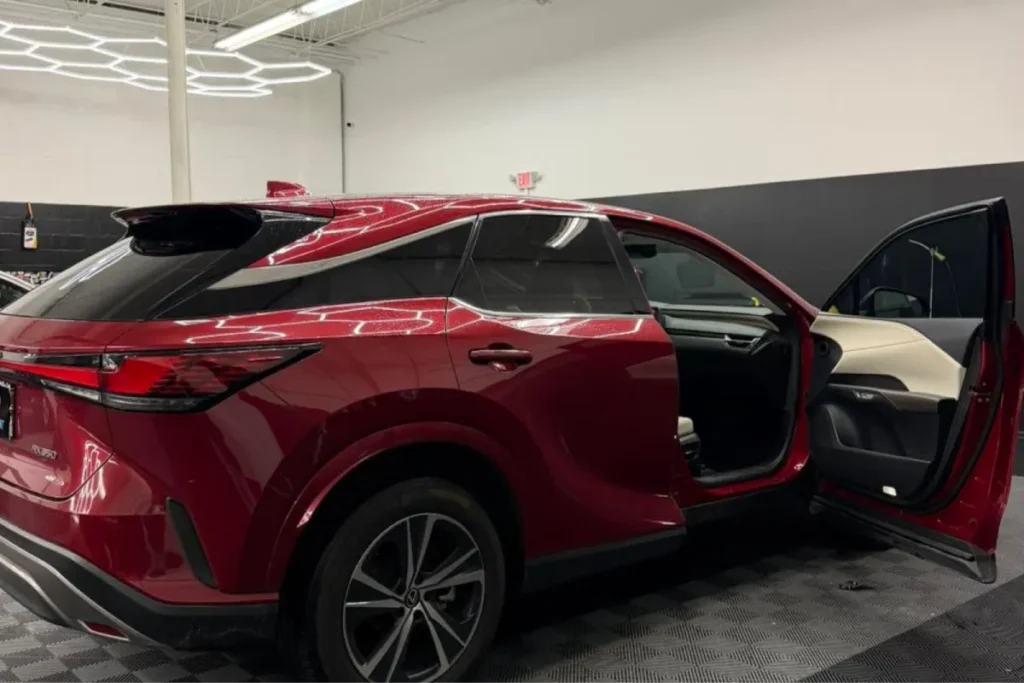
Common Myth: Standard Polishing Removes Every Scratch
One misconception is that any machine polishing service can completely remove scratches from automotive paint.
In reality, scratch removal depends on how deeply the damage extends.
Light defects may respond well to polishing, while deeper scratches can extend beyond what can be safely removed.
A scratch that catches a fingernail may indicate greater depth, although this simple test doesn’t show exactly which paint layer is affected.
Another misconception is that wax and polish perform the same function.
Polish: Contains abrasives or other ingredients intended to clean, refine, or improve the surface.
Wax: Primarily adds a temporary protective layer and may enhance gloss.
Paint correction: Uses controlled abrasive techniques to reduce visible defects in the paint surface.
Ceramic coating: Provides a protective surface layer after suitable preparation but does not replace paint correction.
Understanding these differences helps vehicle owners avoid treatments that can’t deliver their desired results.
When Should You Choose Paint Correction Instead Of Polishing
The decision depends on the vehicle’s current paint condition and desired finish.
For example, a driver in San Marco preparing a luxury sedan for ceramic coating may benefit from correction if existing swirl marks remain clearly visible.
By contrast, a relatively new vehicle with minimal surface damage may need only light polishing or careful preparation.
Consider professional correction when:
- Swirl marks remain visible after washing.
- Light scratches are noticeable in sunlight.
- Reflections appear distorted or cloudy.
- Previous machine polishing left holograms.
- Eligible imperfections should be addressed before applying ceramic coating.
Standard polishing may be sufficient when the paint is already in good condition and the primary objective is mild gloss enhancement.
An experienced technician can explain which imperfections are correctable and which should remain untouched to preserve the clear coat.
How To Maintain Your Paint After Correction
Corrected paint can develop new scratches if improper washing habits continue.
Paint correction improves existing defects but does not make the finish scratch-proof.
Recommended practices include:
- Rinse loose dirt before touching painted surfaces.
- Use clean microfiber towels and wash mitts.
- Choose automotive shampoos suited to the existing protection.
- Avoid abrasive brushes and contaminated drying materials.
- Remove bird droppings and insect residue promptly.
- Avoid unnecessary abrasive polishing.
- Maintain any applied ceramic coating according to its manufacturer’s instructions.
Sunlight, humidity, rain, and road contamination can also affect vehicle appearance over time.
Consistent maintenance helps reduce preventable defects and preserves surface clarity.
Restore Your Vehicle’s Finish With Lifetime Tint
Paint correction and standard polishing both improve vehicle appearance, but they are not interchangeable.
Standard polishing focuses on light enhancement, while professional correction addresses more noticeable defects through controlled machine polishing.
Lifetime Tint provides paint inspection, decontamination, machine polishing, and gloss refinement tailored to the vehicle’s condition.
As a family-owned and female-owned automotive protection business with more than 20 years of industry experience, Lifetime Tint emphasizes clear recommendations, careful workmanship, and helping customers understand their options.
Whether your vehicle has light swirl marks, dull paint, or scratches that show up in sunlight, a professional evaluation can help determine the right treatment.
Ready to bring back your vehicle’s gloss and clarity?
Contact us to schedule a paint correction consultation or request a quote.
People Also Ask
Is Paint Correction Better Than A Regular Polish?
Paint correction is generally more appropriate when a vehicle has noticeable swirl marks, scratches, or other clear coat defects. A regular polish is usually sufficient for minor surface enhancement. The better option depends on paint condition rather than the service name alone.
Can Standard Car Polishing Remove Scratches?
Standard polishing can reduce very light scratches and surface marring. Deeper scratches may require more intensive correction, while damage extending beyond the clear coat may require refinishing.
How Long Do Paint Correction Results Last?
Paint correction produces a physical improvement in eligible paint defects, but new scratches and swirl marks can develop afterward. Results depend on washing practices, environmental exposure, and ongoing maintenance.
Can You Get Paint Correction Without Ceramic Coating?
Yes. Paint correction can be performed as a standalone service to improve paint clarity and gloss. Ceramic coating is an optional protective treatment that may help maintain the corrected finish.